
Why Marketing Data Misleads UX?
Why numbers alone can’t explain user behavior — and how UX research fills the gap.
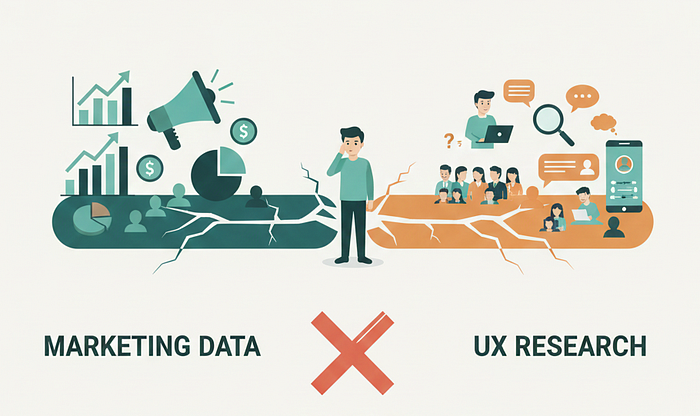 Marketing data and UX research data tells different things
Many business leaders rely on the reassuring numbers provided by marketing research, believing that "they know what their users want." While marketing data is vital for market strategy and target audience identification, it can be dangerously misleading when it comes to UX design.
Marketing data tells us what happened (e.g., 80% said they wanted to buy this feature). UX research tells us why (e.g., 80% of users failed to complete their tasks when using this feature).
Let's take a step-by-step look at why marketing data misleads user experience design:
1. Intention vs. Behavior
Marketing research often measures intentions. In surveys or focus groups, users express future behaviors or imagined features. However:
- Stated: In a controlled environment, there's a high tendency to give socially acceptable answers. No one says "I want a complex interface" in a survey.
- Done: Actual behavior that occurs when using the product in real life, when busy, tired, or distracted.
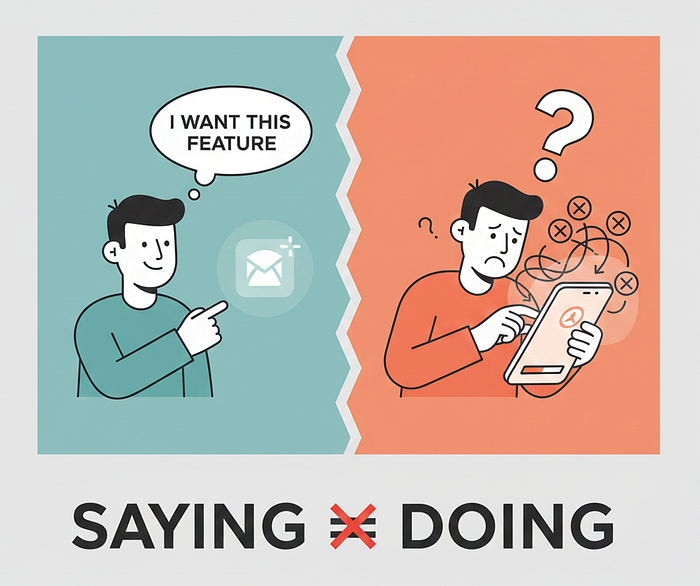 Intention vs Behaviour
A Misleading Example: A survey might show that users want "more customization options." However, UX testing might reveal that adding these options to the interface increases cognitive load and makes it harder to complete the actual task. While marketing data presents a wish list, UX research reveals the reality of usability.
2. Context Matters
Marketing research is often collected in controlled environments (labs, focus groups) or completely detached from context (email surveys). This fails to capture how users use the product in their real lives.
- Is the user using the app with one hand on public transport?
- Is their child crying in the background while they fill out the form?
- Are they in a hurry in the airport queue?
 Context Matters
UX research (especially field studies and contextual interviews) captures this rich context. While marketing data tells us "what the user thinks," UX research shows what the user feels under different circumstances.
3. The Missing "Why" in Numbers
Marketing data is a powerful quantitative resource. Sales figures, segmentation percentages, and purchase intentions reveal large-scale trends. However, this data often fails to provide in-depth cause analysis.
- "Cart abandonment rate is 40%." (Marketing Data)
- Why? "Users are disappointed and abandon the product because they see that the shipping fee is higher than expected at checkout." (UX Insight)
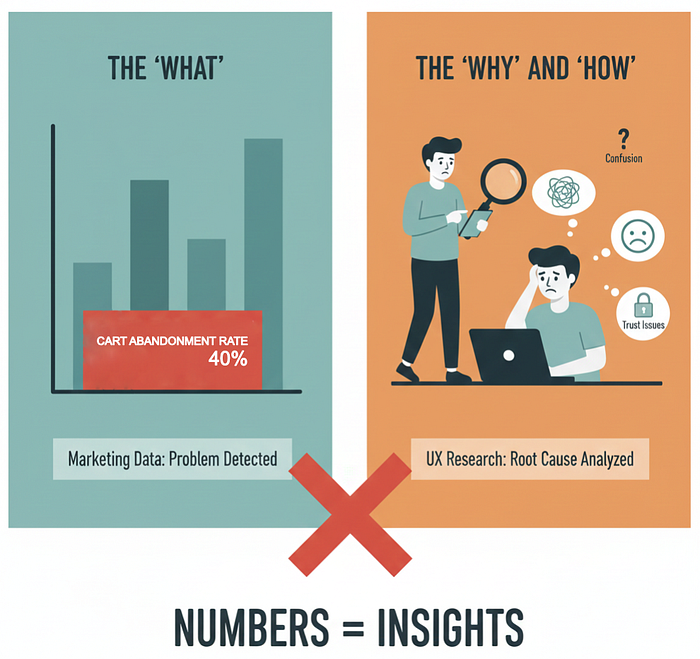 Marketing data points to the problem, UX research data analyse the root cause
UX research identifies the qualitative barriers (frustration, confusion, lack of trust) that cause these quantitative issues (cart abandonment, low conversion). Marketing data identifies the problem, while UX research provides the fix.
So, How Can We Combine Marketing and UX Insights?
Step 1: Institutionalize Insight Sharing (Common Ground)
Prevent different teams from working with different information about the same user. Transform data sharing from an incident-based process into a regular process.
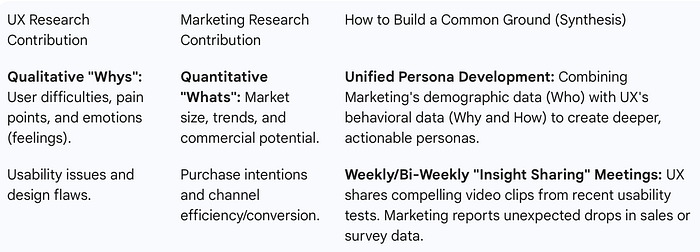 Differences between UX and marketing research and their common ground
Step 2: Highlight UX Problems with Marketing Data (Validation)
Quantitatively prove and prioritize the business impact of UX issues using marketing data.
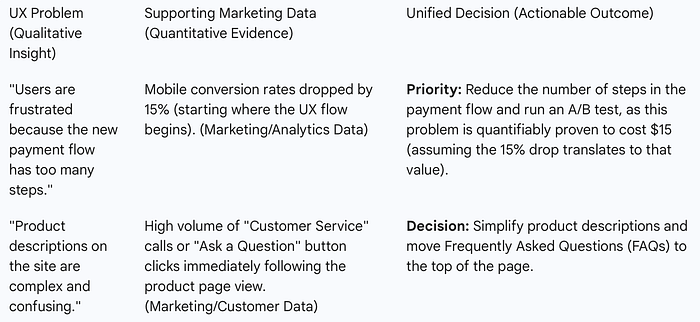 Support the UX problem with marketing data
Step 3: Enrich Marketing Strategy with UX Insights (Action)
Place emotional and behavioral insights from UX research at the core of your marketing messages and channel strategy.
Improving Messaging
During UX interviews, you learn why a user truly loves a product or abandons a competitor. These powerful and emotional statements should form the foundation of your copy.
- UX Insight:
"I had to go through four screens to see the price in your old app, which was so frustrating."
- Marketing Copy:
❌ "Fastest Pricing in the Market!"
✅ "No Hidden Steps. See the Price in One Click." (Straight to the user's pain point.)
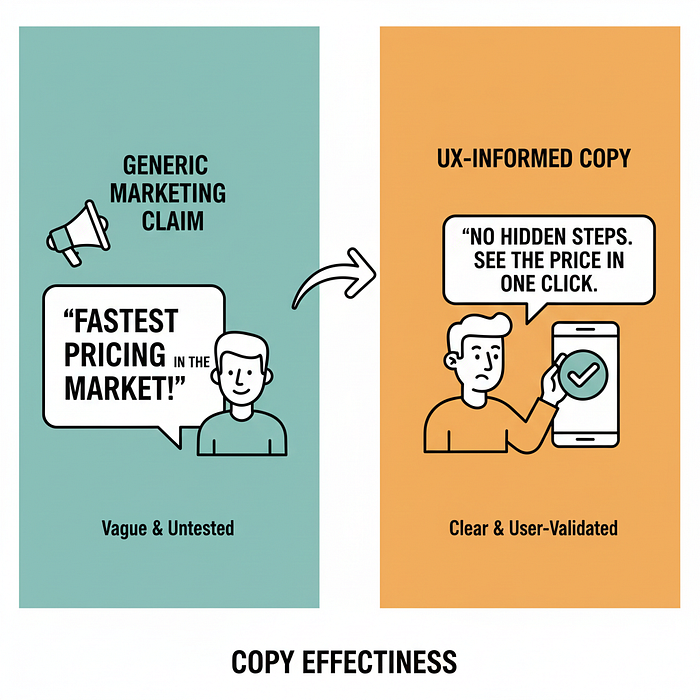 Using UX insight to enrich the marketing strategy
Targeting and Segmentation
Marketing understands demographic segmentation (age, income). UX provides behavioral segmentation (new user or experienced power user).
Holistic Strategy: Marketing delivers UX-focused ads with "Easy Start Guides" to high-income, mobile banking-newcomers (behavior defined by UX).
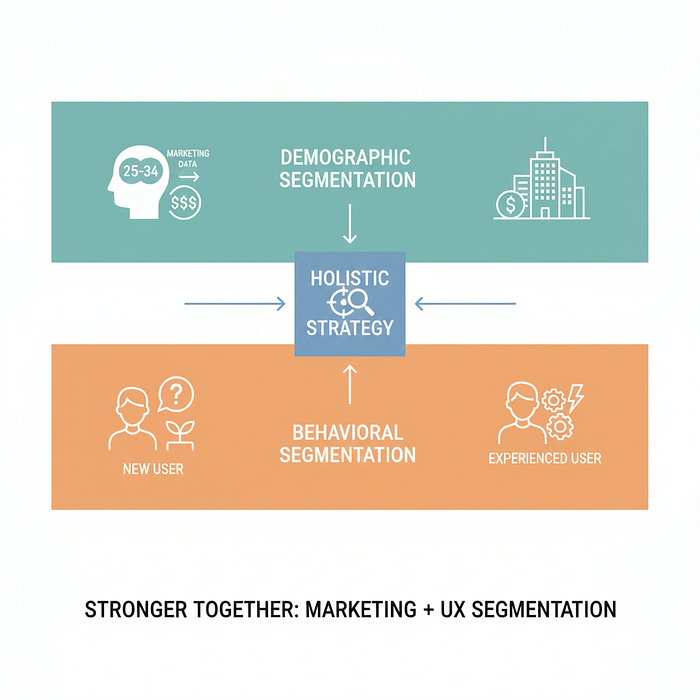 UX and marketing are stronger together.
The key to successful integration is establishing a common success metric that reflects both business objectives (Marketing) and user satisfaction (UX).
An Example Common Metric: "Task Completion Rate in First Session"
This metric addresses UX's usability focus and directly contributes to Marketing's customer retention goal.
Want to be the first to see new posts? Subscribe to get updates straight to your inbox.