
Why a Slack Message Steals 25 Minutes of a Developer’s Time
How Tech Noise Kills Productivity
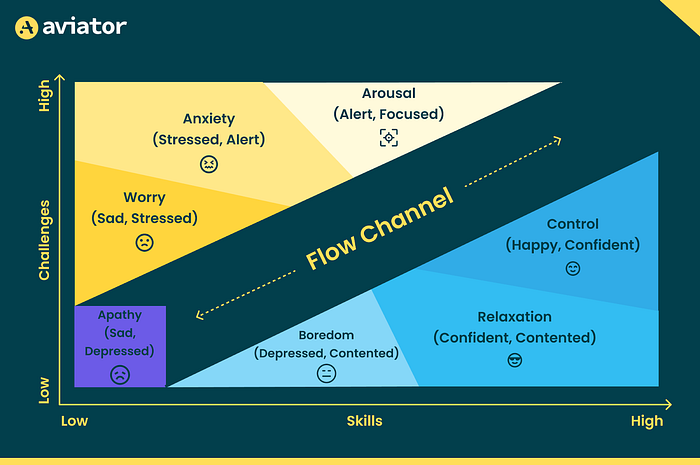 Image Credit: Aviator
Today, developers' workdays are more fragmented than ever. With the rise of remote and hybrid work, communication tools have proliferated: Slack, Teams, Gmail, Jira, Zoom… Each one steals your attention with a small "ping."
This digital buzz, once a subtle background noise, has now become a veritable din. This creates numerous consequences, including the pressure to be constantly online, the expectation of instantaneous responses, fragmented work hours throughout the day, and the interruption of tasks requiring deep focus.
All of this makes it difficult for developers to enter what we call a "flow state." In other words, a developer may be "busy" throughout the day but feel little progress in terms of creativity or productivity.
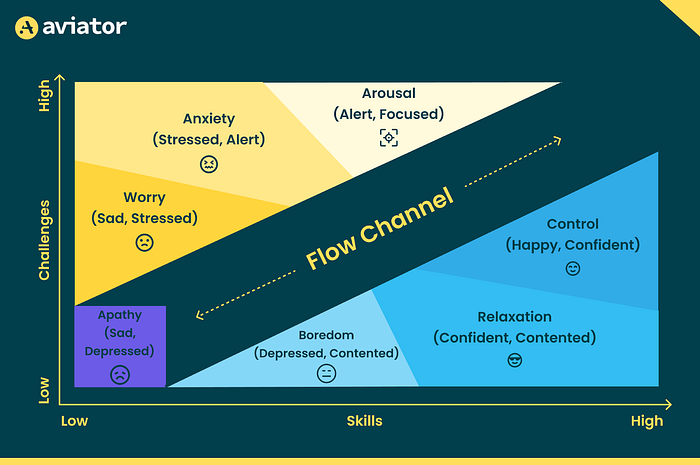 Image Credit: Aviator
Just a Small Notification, So What?
When a notification arrives, two things actually happen:
- Attention is divided.
- The mind suspends its current activity and prepares for the next task.
While this transition, the context switch, may seem like it only takes a few seconds, research shows that it can take up to 20–30 minutes to regain focus after an interruption. So, a single Slack message can cause a loss of focus for up to 30 minutes.
Even an innocent message starting with "Can I ask you something?" disrupts the context of the code in a developer's mind. When it happens several times a day, the total loss translates into hours. Constantly switching tasks creates more bugs, longer development times, higher stress, more technical debt, and lower team morale.
What Do Developers Think?
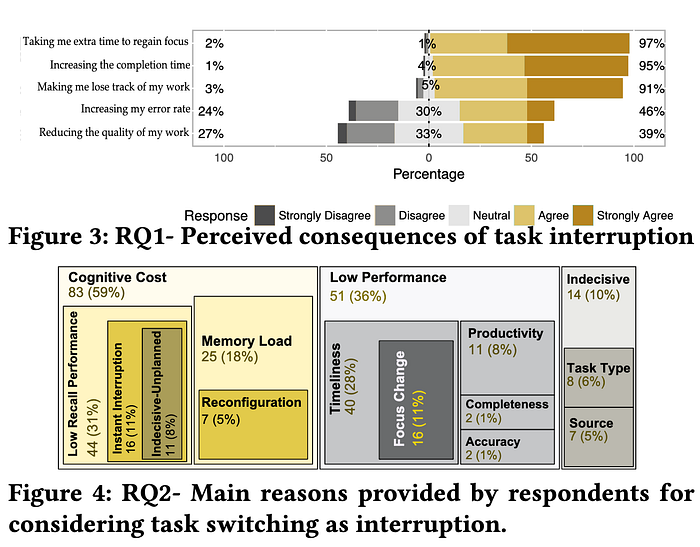
To better understand developers' perceptions of "task switching" and "task interruption," a survey was conducted with 141 professional software developers worldwide (Shakeri Hossein Abad, Noaeen, Zowghi, Far, & Barker, 2018).
56% of participants (79 individuals) reported that they were unable to fully focus on a typical day and frequently switched between different tasks.
32% switched tasks less than 30 minutes, and 24% every 30–60 minutes.
Practitioners find task switching and interruptions, regardless of their source or type, disruptive.
The high cognitive load and decreased performance caused by frequent task switching are the primary drivers of this perception.
Regarding daily meetings, while some participants found them valuable, the majority rated their impact negatively.
Furthermore, the study "A Diary Study of Task Switching and Interruptions" shows similar results. According to the study, an employee kept a diary of their daily tasks and reported an average of 50 task shifts per workweek. Interestingly, there were an average of 0.7 interruptions per task — meaning nearly every task was interrupted once. The average duration of the tasks was 53 minutes; however, the risk of interruption and context refreshing overhead was higher for more complex, returned-to tasks. This demonstrates how loss of focus can become a systemic problem, especially in tasks requiring deep concentration (Microsoft Research).
A Small Calculation
Let's say a developer receives four serious notifications per day. Each notification takes an average of 25 minutes, including the loss of focus and recovery time.
4 notifications x 25 minutes = 100 minutes (1 hour 40 minutes)
So, due to these interruptions alone, the developer is unable to dedicate almost 2 hours a day to productive work.
Calm Tech: Silent But Informative Technology
Calm Tech has a simple principle:
Technology should speak at the right time and in the right way; at other times, it should remain in the background.
When we apply this to the development environment, three main points stand out:
a) Reducing the Number and Intensity of Interruptions
Constantly ringing notifications kill focus. Ways to prevent this:
- Displaying notifications in bulk reduces loss of focus.
- Moving non-urgent messages to asynchronous communication — that is, being able to say "not now" when responding.
- Using focus mode in tools like IDEs or Slack minimizes interruptions and supports deep work.
b) Making Information Visible
Instead of overwhelming the screen with everything, critical information should be visible at a glance:
- Simple and clear dashboards
- Summary reports
- Filtering out unnecessary logs
This way, when you look at the screen, you immediately see what's important and can continue your work without losing deep focus.
c) Calm Yet Informative Systems in the Background
Technology should work quietly in the background, but not completely disconnect you:
- Seeing the build status with a silent icon in the corner
- Turning off non-critical pipeline alerts
- Receiving one summary per day instead of email
This way, you can access relevant information at any time without facing constant distractions.
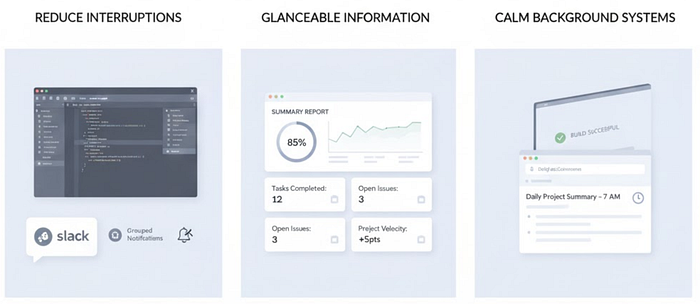 Infographic about Calm Tech
Why Calm Tech is Important?
Calm Tech isn't just about turning off notifications; it's about a work culture, a tool design, and a mindset.
For developers, it means rejecting unfocused work, setting up tools to be attention-friendly, and creating deep work blocks.
For teams, it means asynchronous communication, a "not everything is urgent" culture, and simple, quiet tools.
Reducing the noise of technology dramatically increases developer productivity. Successful teams of the future won't be those who talk more; they'll be those who produce more with less noise.
Time to Take Action!
Try bulking up your Slack notifications today. Turn on Focus mode. Even small steps can reduce focus loss and increase your productivity.
Want to be the first to see new posts? Subscribe to get updates straight to your inbox.