
Invisible AI: What B2B Startups Must Learn from Apple’s WWDC 2026
We were promised an escape from clunky software menus and endless navigation trees. Instead, the tech industry handed us a blinking text…

We were promised an escape from clunky software menus and endless navigation trees. Instead, the tech industry handed us a blinking text box and expected every user to become a part-time prompt engineer.
This exact UX bottleneck-a phenomenon I recently explored in our co-founder Eda's piece about how we stopped clicking but got exhausted writing prompts-is precisely what Apple dismantled at WWDC 2026.
While the rest of the tech ecosystem spent the last two years shouting through megaphones about their hyper-chatty Large Language Models (LLMs), Apple used WWDC to deliver a quiet, devastating masterclass in product strategy.
If you watched the rollout of iOS 27 and the completely rebuilt Siri AI through the lens of a SaaS founder or a UX architect, the message was loud and clear. The era of the shiny "AI toy" is officially over. The future of artificial intelligence isn't a conversational chatbot occupying a third of your screen.
It is an invisible layer of utility-what we call "Calm Tech"-that executes cross-app workflows without demanding a single prompt. For B2B startups and global software companies scrambling to justify their AI investments, Apple just laid out the blueprint.
Rather than chasing the next AI trend, here is how adopting this 'invisible' philosophy can quietly elevate your team's next product sprint.
 Source: Apple
1. Stop Building Wrappers. Start Fixing Workflows.
Over the last few years, the startup playbook was painfully predictable: staple a chat interface onto an external API, call it "Copilot," and hike up the monthly subscription.
WWDC 2026 exposed the fatal flaw in this strategy. Even though Siri's massive update still leverages powerful external models like Gemini for heavy lifting, Apple didn't just "plug and play." They didn't build a wrapper.
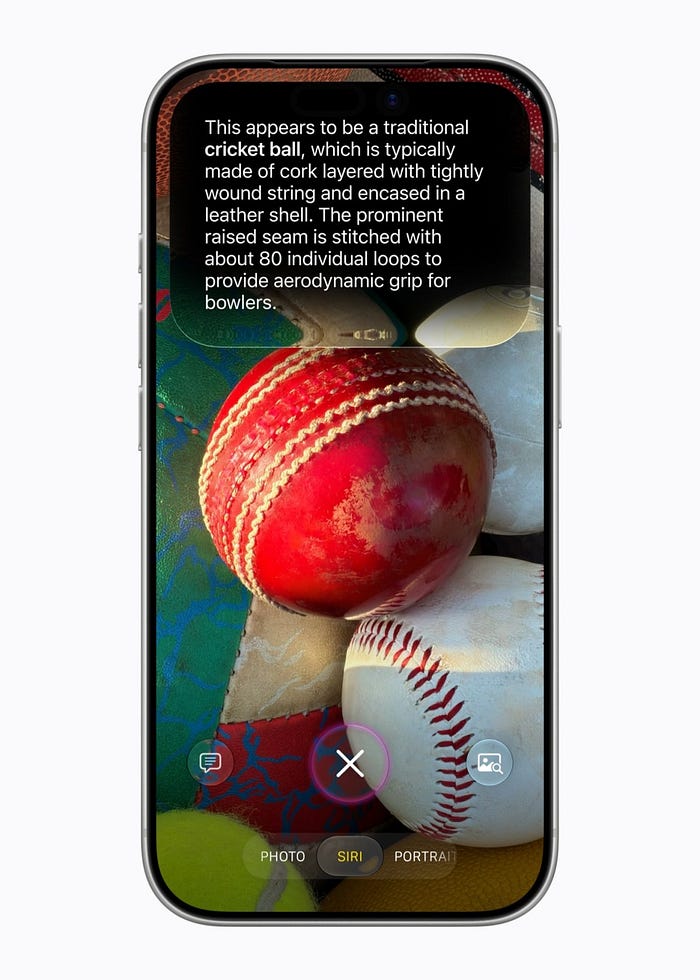
Instead, they used the LLM purely as a reasoning engine and built a massive contextual orchestration layer on top of it. They baked this intelligence directly into the semantic index of the operating system. Siri AI's leap isn't about having deeper philosophical conversations; it is about cross-app execution and onscreen awareness.
When a user says, "Send that flight itinerary to Sarah," the system uses the underlying AI to understand intent, but the actual value comes from Apple's proprietary layer: it understands the context of your screen, pulls the PDF from Mail, matches "Sarah" to the most frequent contact in Messages, and executes the transfer. No copying, no pasting, no prompt engineering.
The SaaS Insight: Integrating external models like Gemini or OpenAI into your product is a smart move, but acting as a mere pass-through is a dead end. Your product's true competitive moat lies in the orchestration layer you build on top of the AI-connecting the LLM's reasoning capabilities directly to your user's specific workflows without them ever noticing the underlying engine.
 Source: Apple
2. The Return of "Calm Tech" in Micro-Interactions
Good design is about getting out of the user's way. Apple's smaller iOS 27 updates showcased how micro-interactions generate significantly more user goodwill than complex feature drops.
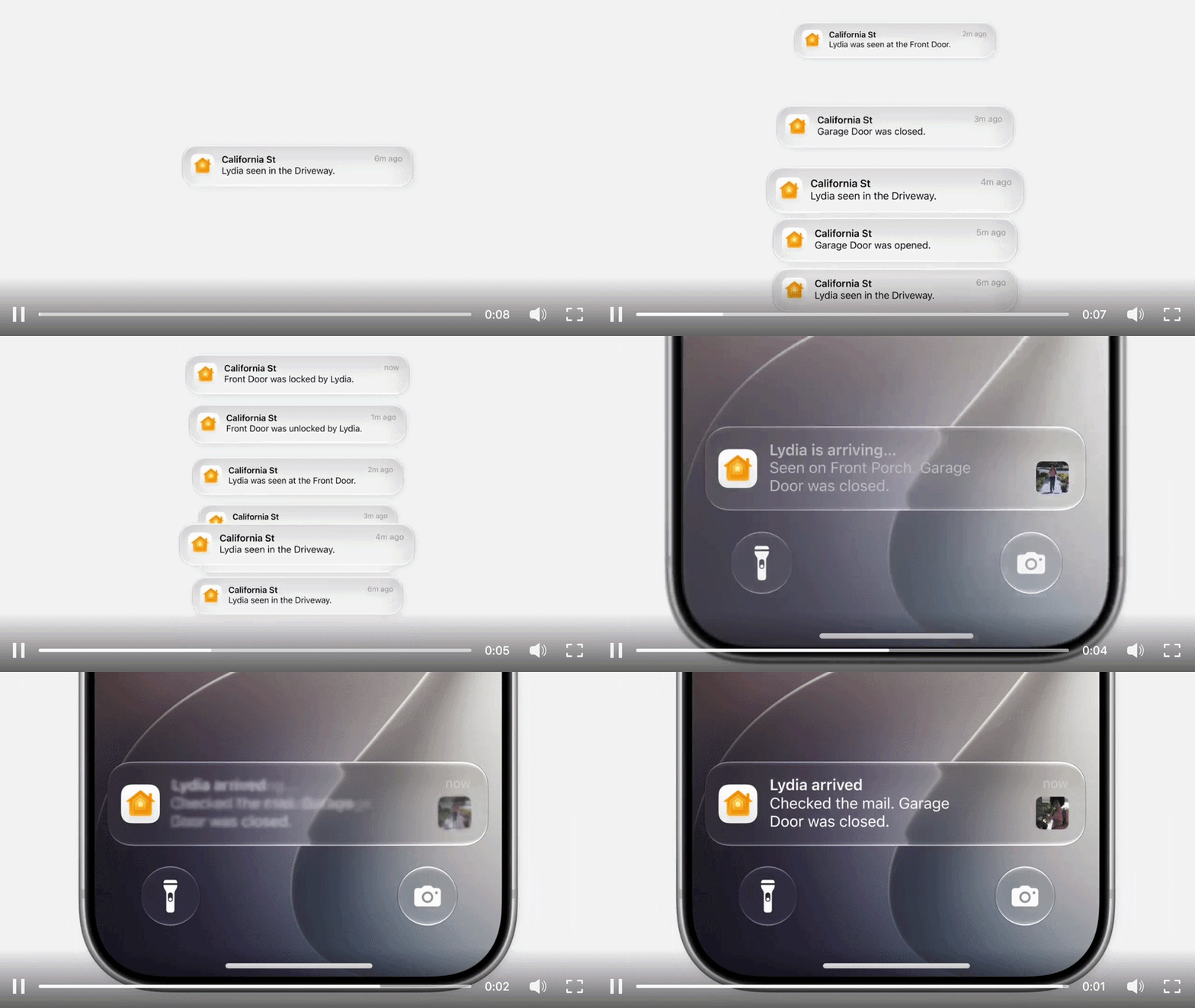
Consider the new AI-powered contextual automation in the Home app, or Safari's thematic tabs that silently organize research without being asked. These aren't computationally heavy tasks, but they drastically reduce cognitive load. They respect the user's focus and mental bandwidth.
The SaaS Insight: Audit your platform's cognitive load. Are your AI features fighting for your user's attention with constant pop-ups and suggestions? Transition your AI from being a noisy "interruption" to being a quiet "assistant."
 Source: Apple
3. Privacy Architecture as a Strategic Moat
You cannot analyze WWDC 2026 without addressing the regulatory elephant in the room. With the EU's strict AI Act and China's localized data mandates, global SaaS companies are hitting a compliance wall. (In fact, Apple themselves delayed the rollout of Siri AI in the EU and China to navigate these exact frameworks).
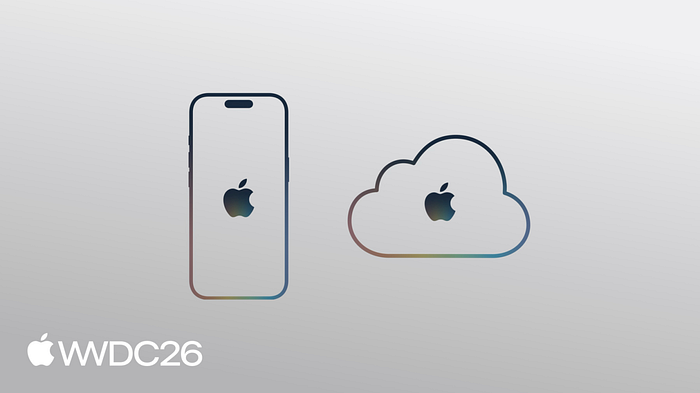
Apple's solution is a masterstroke in software architecture: Private Cloud Compute. By running the majority of tasks on localized Foundation Models and only securely offloading complex reasoning to the cloud, they bypass massive regulatory headaches.
 Source: Apple
Instead of writing complex code, modern B2B platforms need to adopt this as a three-step routing philosophy:
- Step 1: The Local Default (Zero-Trust): If a user intent involves sensitive enterprise data or requires simple contextual awareness, execute it entirely on the local device or edge environment. No data leaves the client.
- Step 2: The Secure Handoff: For complex reasoning tasks that require more compute power, the system automatically strips away Personal Identifiable Information (PII) before routing the prompt to the cloud.
- Step 3: Cryptographic Deletion: Once the cloud processes the complex task, the data is not retained, trained on, or stored. It simply vanishes.
The SaaS Insight: For B2B companies serving enterprise clients, privacy is no longer just a legal checkbox-it is a core feature. If you are building for a global market, edge computing and localized, privacy-first AI architectures are mandatory. Your enterprise clients will soon demand the same cryptographic proof of privacy that Apple is normalizing today.
The Blueprint for Your Next Sprint
If your team is planning its Q3/Q4 product roadmap, take a step back from the Generative AI hype cycle. Ask yourselves:
- Are we forcing the user to talk to our product, or is our product anticipating the user's intent?
- Can we move our AI features out of dedicated "AI tabs" and integrate them directly into the primary workflow?
- Is our AI architecture resilient enough to pass a procurement compliance check from a European enterprise?
The winner of the next technological decade won't be the company with the loudest, smartest chatbot. It will be the company that makes their users completely forget they are even using AI.
Let's discuss in the comments below. If these insights sparked ideas for your next product sprint, share this article with your UX and engineering teams. For more deep dives into product strategy and calm tech architecture, make sure to follow the Appibara company page.
#SaaS #UXDesign #ProductStrategy #AppleIntelligence #CalmTech #ZeroUI #B2B #TechTrends
Originally published at https://www.linkedin.com.