
From 1960s Counterculture to the AI Era: The Evolution of “Vibe Design”
From the 1960s counterculture to modern AI tools, discover why humans must stop pushing pixels and start crafting souls.
Right now, there's a specific phrase echoing through Silicon Valley and product design circles everywhere: Vibe Design. We're living in a world where AI can spit out a perfectly functioning interface in seconds. Because of that, the entire industry is waking up to a tough reality — designers need to stop obsessing over basic functionality and start focusing on how an app actually feels.
But the idea that a piece of software can have a "soul" didn't just pop up overnight with the AI boom. There's a wild, 60-year history behind this concept. It stretches from rock music and Japanese automotive engineering all the way to Gen Z internet slang.
So, how exactly did a word born in the streets become the ultimate competitive moat in software development?
The 1960s: Good Vibrations
It all starts with the word itself. "Vibe" is, of course, shorthand for vibration. Back in the 1960s, the hippie counterculture — heavily influenced by mysticism — genuinely believed that people and physical spaces emitted invisible energy fields.
The word exploded into mainstream culture in 1967 thanks to The Beach Boys' legendary track, "Good Vibrations." Brian Wilson actually wrote the song trying to capture the "invisible feelings" that spaces and people give off. From that moment on, "vibe" cemented itself in our vocabulary as that intangible atmosphere you feel when you walk into a room, even if you can't measure it analytically.
The 1980s & 90s: Kansei Engineering
While the West was still treating "vibes" as some abstract musical concept, Japanese engineers were busy turning it into a hard science. Throughout the 1980s, Mitsuo Nagamachi at Hiroshima University developed the framework for "Kansei Engineering" (Affective Engineering).
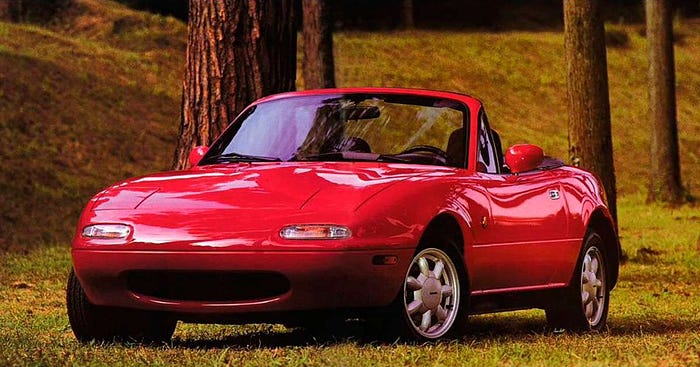
They tested this philosophy in the real world with the legendary Mazda MX-5 (Miata). The goal wasn't just to build a fast car. They wanted to evoke Jinba Ittai — the seamless, almost telepathic connection between a horse and its rider. Every tiny detail, from the tactile resistance of the gear shifter to the specific acoustic pitch of the engine, was reverse-engineered from that one core feeling.
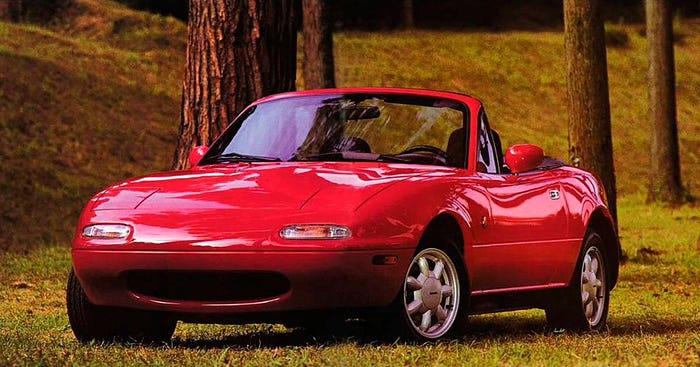
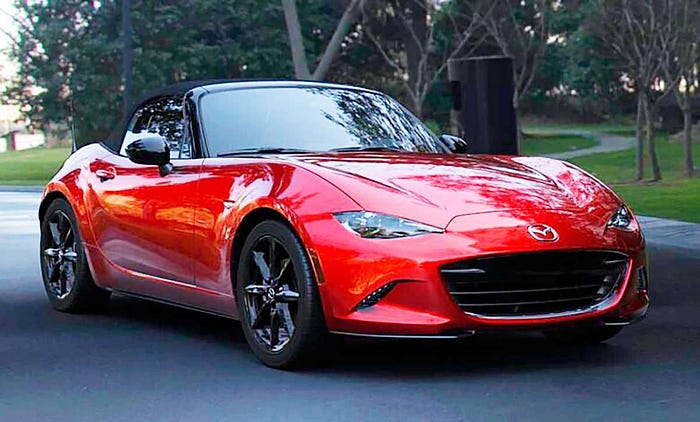 1980s (left) vs 2020's (right) Mazda MX-5 (Source: Kansai Analytics)
But the real turning point for the global design community happened in 1995, when Nagamachi published his definitive paper on the subject [1]. Though he had written about Kansei earlier, that 1995 publication acted as the official manifesto. Why did that specific paper matter so much? Because it took the fuzzy concept of "human emotion" and formalized it into a repeatable, mathematical system. Nagamachi proved that you could systematically translate a psychological feeling into hard product parameters. Looking back, this was the world's first true instance of industrial Vibe Design — and ironically, it's the exact same logic we use today when we ask an AI to generate a specific atmosphere.
The Early 2000s: The Skeuomorphic Band-Aid
Fast forward to the internet revolution. Software engineers suddenly faced a massive problem: digital screens felt cold, alien, and intimidating. To give these screens a comforting vibe, they turned to Skeuomorphism.
Think back to the early days of the iPhone under Steve Jobs. The Notes app had yellow lined paper and faux leather stitching. Game Center looked like a green felt casino table. Apple essentially copy-pasted the physical world's vibe into software so users would feel safe and at home in this weird new digital space.
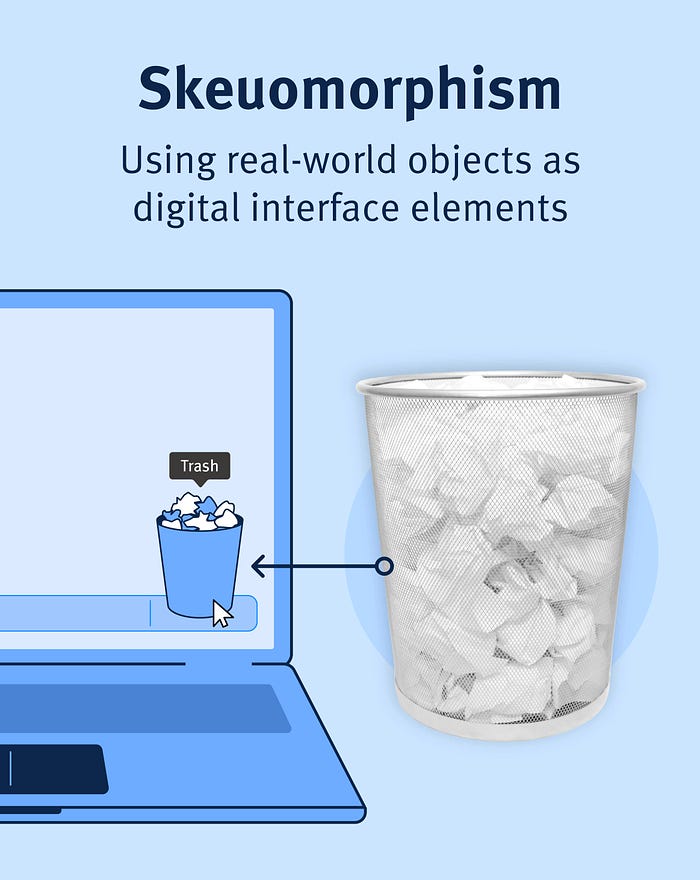 Source: NN Group (Designed by Megan Brown)
The 2010s: Flat Design and the Death of the Vibe
Then came 2013. iOS 7 dropped, and the design world suffered a massive fracture. Out went the leather textures and drop shadows. In came Flat Design.
For the next decade, the software industry lived under the strict dictatorship of usability metrics. We saw the rise of a condition designers jokingly called "Dribbblization" — everything started looking like the same trendy, minimalist templates you'd see on Dribbble. Companies worshiped A/B testing, desperate to reduce "user friction" to zero.
But in the process, they scrubbed away all the soul. Paying a medical bill online looked visually identical to queuing up a playlist on a music app: white backgrounds, rounded corners, sans-serif fonts. Usability peaked, but the vibe died. This era largely ignored foundational cognitive science, like Kurosu and Kashimura's 1995 study proving that aesthetic appeal directly influences how usable a product actually feels to a human [2]. We stripped the aesthetics bare just to satisfy the data.
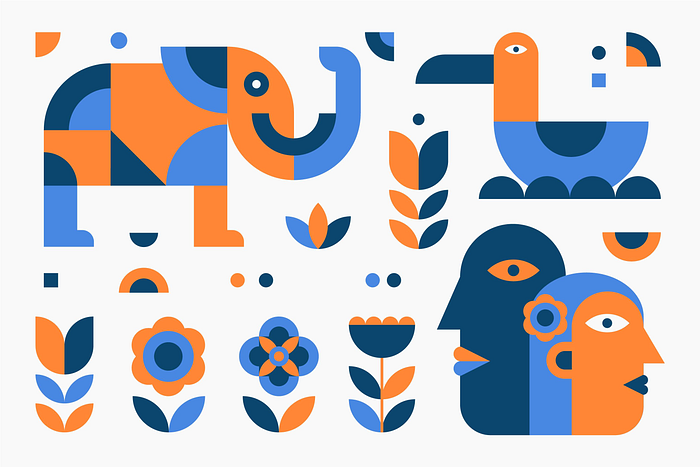 Flat Design (Source: Freepik)
The Early 2020s: The "Vibe Check"
Gen Z, a generation raised entirely on sterile, cookie-cutter apps, eventually rebelled. The word "vibe" resurfaced, this time as internet slang. Young people stopped asking, "Is this app easy to use?" Instead, the ultimate test became: "Does it pass the vibe check?"
A few visionary companies caught onto this shift early and built billion-dollar empires purely on vibes.
Look at Slack. When they launched, the market was already flooded with perfectly functional corporate chat tools like Skype and HipChat. Slack didn't invent chat; they invented a new atmosphere. They replaced the gray, suit-and-tie corporate interface with playful loading messages, vibrant colors, and custom emojis. They won because they shifted the vibe from "stressful boardroom" to "casual hangout."
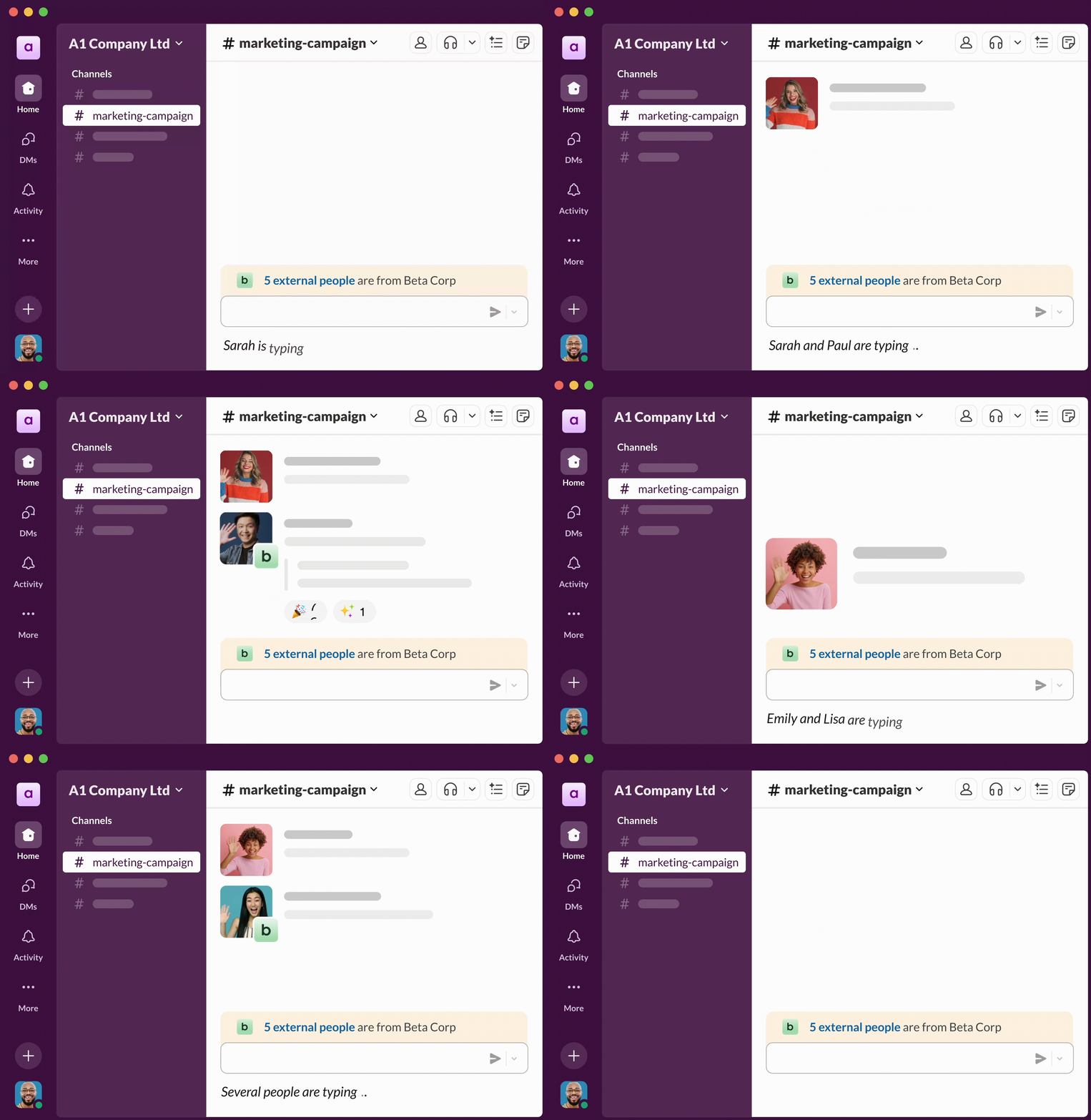 Source: Slack
Or look at Notion. They went up against giants like Microsoft Word and Evernote. Notion didn't win by adding more complex features. They won by turning word processing into a digital Zen garden. With their iconic use of cover images, page emojis, and clean typography, they created a calm, aesthetic workspace. Users didn't just use Notion; they decorated it. They weren't selling a database; they were selling the vibe of a focused, lo-fi study room.
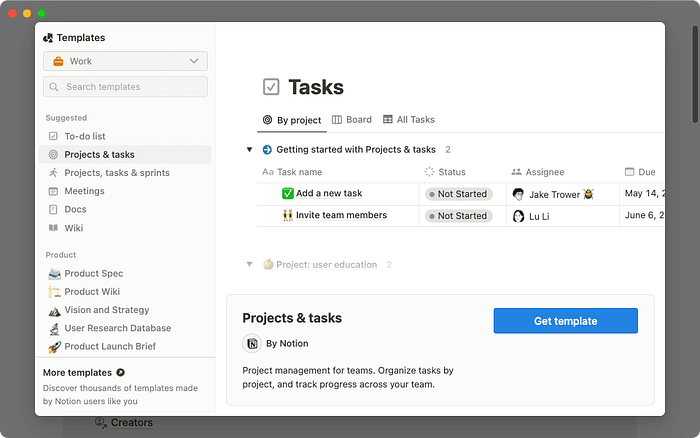 Source: Notion
Today: Vibe Design in the AI Era
And now, we find ourselves here. Generative AI tools like Claude Design Stitch and v0 spit out the last decade's "perfect but sterile" interfaces in a matter of seconds.
Setting up grids, aligning menus, and picking hex codes is no longer the main job of a designer or product manager. The machine handles the logic. So, what exactly is left for the humans?
Managing the feeling.
Just like the Kansei engineers in the 80s, and just like Brian Wilson in the 60s, our job is to orchestrate those invisible vibrations. When you prompt an AI today, you don't say, "Make this button blue." You say, "Make a screen feel like a slow, cozy Sunday morning reading a magazine, rather than a frantic Monday morning email triage."
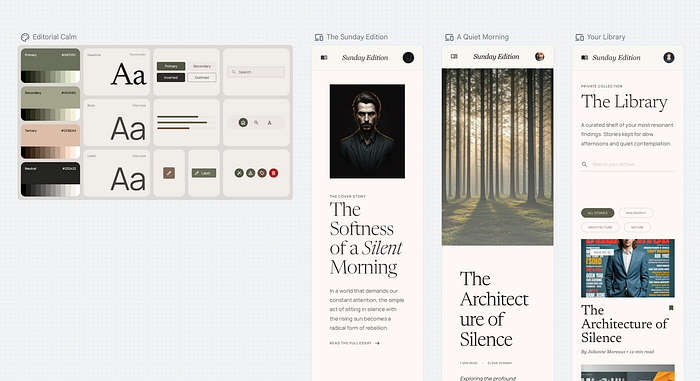 "Make a screen feel like a slow, cozy Sunday morning reading a magazine, rather than a frantic Monday morning email triage "— This is a Vibe Design experiment where the AI tool Stitch translates this feeling into an interface.
The era of pushing pixels is officially over. AI isn't giving software a soul — it is simply taking over the tedious mechanics of usability. By freeing us from the grid, the machine has finally given us the time to bring back the human touch we lost during the flat design era.
Let the AI build the interface. We have a vibe to design 😎
References
- [1] Nagamachi, M. (1995). Kansei Engineering: A new ergonomic consumer-oriented technology for product development. International Journal of Industrial Ergonomics, 15(1), 3–11.
- [2] Kurosu, M., & Kashimura, K. (1995). Apparent usability vs. inherent usability: experimental analysis on the determinants of the apparent usability. CHI '95 Conference Companion on Human Factors in Computing Systems.