
Designing Trust, Not Screens
The 6C Framework for Building Trust in Modern UX
 Design is no longer just decoration; it's strategy.
Have you ever had an app or website that you immediately thought "fit perfectly" the moment you used it? An experience where everything was intuitive, reliable, and perfectly suited to your immediate needs…
But what about the opposite? A digital product that you abandoned because its interface was confusing or didn't live up to its promises?
In our increasingly digital world, the difference between these two experiences can no longer be explained solely by aesthetics. Bad user experiences have serious impacts on business outcomes: Research shows that 88% of online users are less likely to return to the same site after a bad experience (Toptal, 2021). Design is no longer just decoration; it's strategy.
As digital interactions become the norm, simply "looking good" is no longer enough. Users expect clear, reliable, and meaningful experiences. This expectation has moved UX design beyond superficial usability to deeper principles that shape how users perceive, trust, and connect with a product. At this point, the 6Cs rule offers a practical framework for designing truly engaging experiences.
From Usability to Experience
For many years, the focus of UX design was usability: enabling users to complete tasks quickly and efficiently. However, expectations have shifted with the rise of smartphones, AI-powered personalization, and constant online connectivity. Today's users compare a digital experience not just to competitors, but to the best experience they've ever had.
PwC research clearly demonstrates this shift: Consumers now value experience as much as product and price (PwC, 2018). Simultaneously, design-focused companies have seen up to 32% higher revenue growth over a decade compared to their competitors (McKinsey, 2018).
In an environment with low transition costs and abundant alternatives, user loyalty is highly fragile. Frameworks like the 6Cs help teams create conscious design; ensuring every interaction reinforces a sense of trust, clarity, and relevance.
Breaking Down the 6C Rule
The 6C rule brings together the fundamental principles of UX in a memorable structure:
Clarity, Consistency, Control, Credibility, Context, and Content.
When viewed individually, they are simple, but when considered together, they are extremely powerful.
 6C Rule
Clarity: Reducing Cognitive Load
Clarity means users can instantly understand:
- Where they are
- What they can do
- What the outcome of an action they take will be
Uncertainty creates friction. Even small confusions increase cognitive load and frustration. Research by Nielsen Norman Group shows that improving usability — for example by simplifying structure and clarifying language — is closely associated with higher conversion rates, as better design reduces friction and helps users complete key actions more effectively (NN/g, 2013).
Clear navigation, descriptive labels, and immediate feedback reduce the need for users to make conscious efforts. When clarity is achieved, the interface virtually "disappears," and the user focuses on their goal, not the system.
Consistency: Building Familiarity and Trust
Consistency means that similar elements behave similarly everywhere — across screens, features, and platforms. Otherwise, users have to constantly relearn, leading to a loss of trust and errors. Jakob Nielsen's usability intuitions identify consistency as the cornerstone of learnability and trust (NN/g, 2000). Visual language, interaction patterns, and terminology should be predictable. Over time, this predictability leads to comfort, and comfort leads to loyalty.
 Photo by Cytonn Photography on Unsplash
Control: Protecting User Autonomy
Users want to feel in control. Control includes:
- The ability to undo actions
- Clear exits from unwanted situations
- Transparency on how the system works
Trust is undermined if the user feels cornered or unprepared. Nielsen Norman Group's principle of "user control and freedom" emphasizes that undoable actions and clear options reduce anxiety and increase satisfaction (NN/g, 1999).
Good UX does not restrict the user; it supports them in making confident decisions.
Credibility: Earning and Maintaining Trust
Control is insufficient without trust. Credibility is built on:
- Honest communication
- Consistent and reliable performance
- Transparent privacy and security practices
According to the Stanford Persuasive Technology Lab, perceived credibility is a decisive factor in users' use and recommendation of a digital product (Stanford, 2002). Visual quality is important; however, trust is primarily reinforced by the consistency of promises made with the behavior exhibited. A credible product doesn't exaggerate. It delivers — and clearly states its limits.
Context: Designing the Moment
Context answers the question:
"What does the user need right now?"
It includes elements such as location, time, device, previous behavior, and intent. Ignoring context leads to generic experiences. Respecting it increases relevance. Context-focused design adapts without overwhelming the user; it offers the right options at the right time — neither too much nor too little.
 What does the user need right now?
Content: The Experience Itself
Content is not just filler; it is the interface itself. Every word, image, and piece of data shapes the user's perception and feelings. Bad content can sabotage even the best visual design. Effective content:
- Is helpful
- Is understandable
- Is presented at the right time
When content aligns with user goals and context, it simultaneously enhances clarity, reliability, and engagement.
The 6Cs in Practice
Netflix: Context & Content
Netflix's recommendation system adapts both the content and visual presentation to viewing habits, time, and preferences. The same movie can be shown to different users with different posters, highlighting the most interesting aspects (Netflix Tech Blog, 2018). This contextual personalization makes the experience personal, rather than generic.
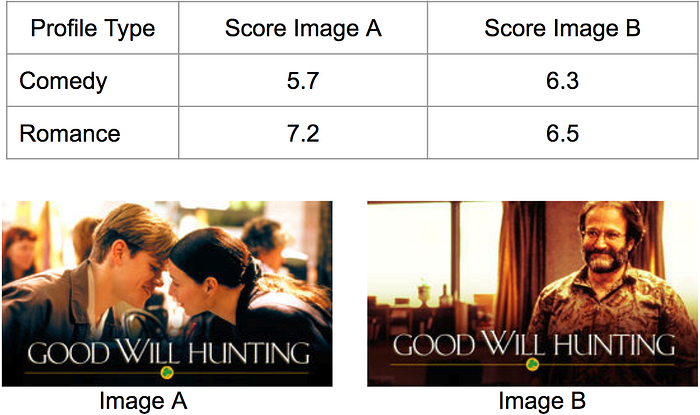 Netflix Tech Blog — Movie Poster Personalization
Google Maps: Clarity & Control
Google Maps simplifies a complex task like navigation with clear visual hierarchy and strong user control. Users can effortlessly switch between route, mode of transport, and view, maintaining a sense of security even in unfamiliar environments.
The 6C rule is not a checklist, but a mindset. Products often fail not because of a lack of features, but because they silently violate one of these principles. When Clarity, Consistency, Control, Reliability, Context, and Content are prioritized, experiences become intuitive, trustworthy, and human. It creates experiences that not only work but also build relationships. The real question isn't whether your product is good or not. It's which of the 6Cs it quietly failed at.
Want to be the first to see new posts? Subscribe to get updates straight to your inbox.